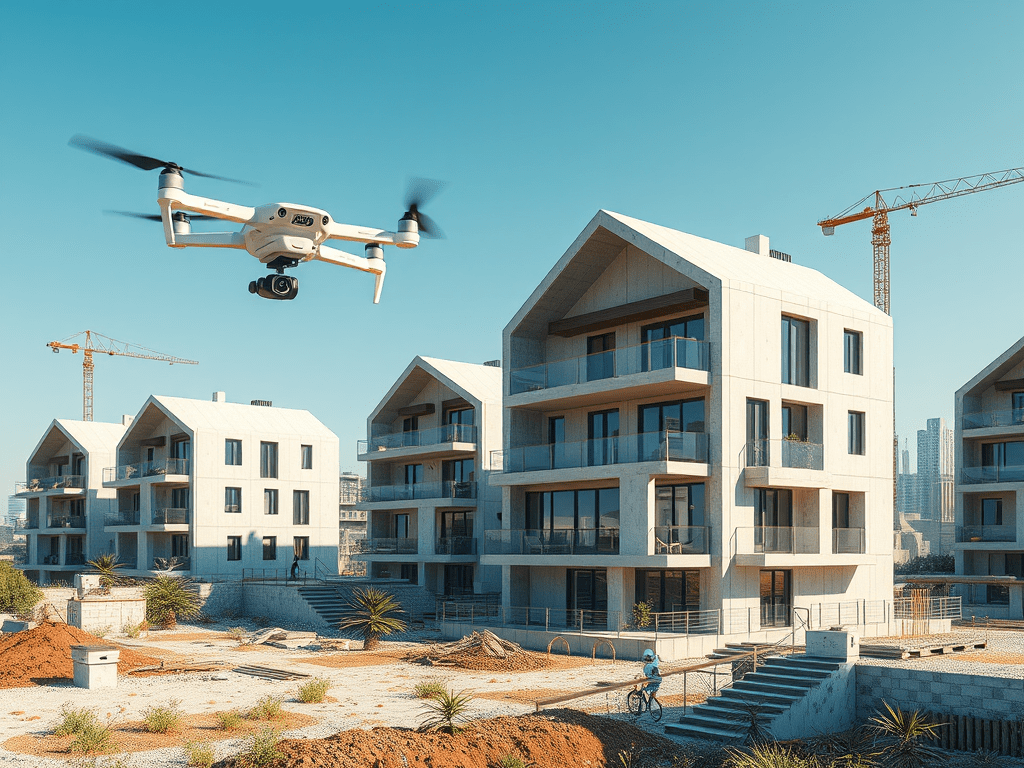
In today’s rapidly evolving urban landscape, one of the most pressing challenges is providing affordable, sustainable, and resilient housing for an ever-growing population. Traditional construction methods, often burdened by inefficiencies, rising costs, and lengthy timelines, are being outpaced by revolutionary technological advancements that promise to reshape the way we build and live. Emerging innovations—including prefabricated construction, advanced materials, AI-driven smart homes, drones, robotics, Building Information Modeling (BIM), and immersive augmented and virtual reality technologies—are converging to transform housing challenges into unprecedented opportunities for progress and creativity.
Prefabricated Construction: Speed and Sustainability
At the forefront of construction innovation is prefabricated (prefab) construction, which entails manufacturing building components in a controlled, off-site environment and transporting them for on-site assembly. This method dramatically reduces construction time and waste while ensuring superior quality through standardized processes. Prefabrication not only streamlines labor-intensive tasks but also minimizes the environmental impact of construction, making it an essential tool for meeting the growing demand for affordable housing. By reducing the reliance on traditional, lengthy build processes, prefabricated construction paves the way for rapid urban expansion and cost-effective housing solutions.
Advanced Materials: The Backbone of Resilient Structures
Alongside innovative construction methods, advanced materials are revolutionizing the durability and efficiency of modern housing. Emerging materials such as self-healing concrete, high-performance insulation, green materials (e.g., Lignik) and carbon fiber composites are enhancing the structural integrity of buildings while offering improved energy efficiency. These state-of-the-art materials can reduce maintenance costs, lower energy consumption, and extend the lifespan of housing units. As environmental concerns and sustainability pressures mount, the integration of advanced materials is proving to be integral to constructing homes that are not only robust but also eco-friendly.
The Internet of Things: Creating Connected Living Environments
The Internet of Things (IoT) is redefining modern living by turning houses into smart, responsive environments. Integrated sensors and connected devices enable real-time monitoring and management of energy usage, security systems, and utility services. These interconnected systems communicate seamlessly, allowing homeowners and building managers to optimize resource usage, pre-emptively address issues, and even tailor the living environment to individual preferences. In housing developments, IoT facilitates data-driven decision-making from construction through occupancy, ensuring that every dwelling is equipped for the demands of the twenty-first century.
AI and Smart Homes: Intelligent Solutions for a Dynamic Future
Artificial Intelligence (AI) is venturing far beyond theoretical applications; it is at the heart of the smart home revolution. With AI-powered automation and predictive analytics, homes can now anticipate maintenance needs, optimize energy efficiency, and dynamically adapt to the lifestyle of their occupants. These smart home systems learn from user behavior, offer enhanced security features, and even contribute to overall community management in integrated housing developments. By harnessing AI technology, the home evolves into a living partner—one that ensures comfort, safety, and efficiency in an increasingly complex urban environment.
Drones and Robotics: Precision and Efficiency on the Construction Site
Drones and robotics are setting new standards in construction accuracy and safety. Drones provide aerial surveys and real-time imaging of construction sites, offering project managers unprecedented insights into the progress and quality of work. Concurrently, robotics are automating repetitive and hazardous tasks, from bricklaying and assembly of modular units to detailed inspections of infrastructural elements. This technological infusion not only accelerates construction but also minimizes the risk of human error, ensuring that housing projects are completed on schedule and within budget.
Building Information Modeling: The Digital Blueprint of the Future
Building Information Modeling (BIM) is dramatically transforming the construction workflow by providing a comprehensive digital representation of a building’s physical and functional characteristics. BIM allows all stakeholders—from architects and engineers to contractors and facility managers—to collaborate in a shared virtual space. This digital platform streamlines the design, construction, and maintenance processes, reducing conflicts, enhancing communication, and ensuring that every project is executed with precision and clarity. In the context of housing challenges, BIM is an indispensable tool for delivering projects that meet both budgetary constraints and high standards of quality.
One notable example is the Royal Adelaide Hospital in Australia. This project utilized BIM extensively for design analysis, environmental studies, construction planning, and coordination. The technology enabled seamless collaboration among stakeholders, improved design-to-fabrication workflows, and ensured efficient model tracking and deliveries.
Another example is the Helsinki Airport Terminal extension in Finland. BIM was used to manage the project’s complexity, with over 400 detailed models shared among stakeholders. The technology facilitated effective collaboration, clash detection, and informed decision-making throughout the construction process.
One notable example of Building Information Modeling (BIM) usage in China is the Shanghai Tower project. As the tallest building in China and the second tallest in the world, this 632-meter skyscraper utilized BIM extensively throughout its design and construction phases. BIM was employed to optimize the building’s asymmetrical shape, which reduced wind loads by 24% compared to a rectangular structure of similar height. Additionally, BIM facilitated the design and installation of over 20,000 curtain wall panels, each with unique shapes, ensuring precision and efficiency.
Augmented Reality and Virtual Reality: Immersive Tools for Design and Training
Augmented Reality (AR) and Virtual Reality (VR) are revolutionizing the way we conceptualize, design, and experience housing. AR tools overlay digital information onto the physical world, enabling real-time, on-site problem solving and design adjustments. VR technology allows designers, engineers, and potential homeowners to immerse themselves in a fully rendered, interactive simulation of a project long before the first brick is laid. These immersive experiences not only enhance planning accuracy and stakeholder engagement but also serve as powerful education and training tools, bridging the gap between innovative design ideas and practical, real-world applications.
Integrating Tomorrow’s Solutions for Today’s Housing Challenges
The convergence of these advanced technologies offers a transformative vision for housing—one that addresses affordability, sustainability, and efficiency simultaneously. Prefabricated construction, empowered by advanced materials, streamlines the building process; the integration of IoT, AI, and smart home systems ensures a responsive, energy-efficient living environment; while drones, robotics, BIM, and immersive AR/VR tools solidify the precision and collaboration necessary to deliver modern housing solutions.
Collectively, these technologies form a synergistic network that reduces construction risks, optimizes costs, and accelerates project delivery timelines—providing robust solutions to the persistent challenges of housing in the modern era.
Looking Ahead: A Blueprint for the Future
Innovative technologies in construction are not merely incremental improvements; they represent a quantum leap toward solving some of society’s most stubborn housing challenges. As urban populations continue to swell and environmental concerns intensify, the integration of these groundbreaking tools ensures that we are well-equipped to meet future demands head-on. The housing of tomorrow will be characterized by intelligent design, sustainable practices, and, above all, a commitment to enhancing the quality of life for all residents.
In this technological renaissance, the future of housing is not a distant possibility—it is being built today. The onus is on stakeholders to embrace these advancements, fuse them with visionary design, and craft resilient communities that are as smart as they are sustainable. The journey is complex, but with innovation at our core, the blueprint for tomorrow’s cities is bright and remarkably attainable.
Further Reading
- Adeerus Ghayan. “Orycycle.” Islamabad: Subagh (2018).
- “Nureeva and Tangora” by Adeerus Ghayan.
- “Lignik: A Solution to Housing Issue” by Gohar Ali Khan

 Adeerus Ghayan