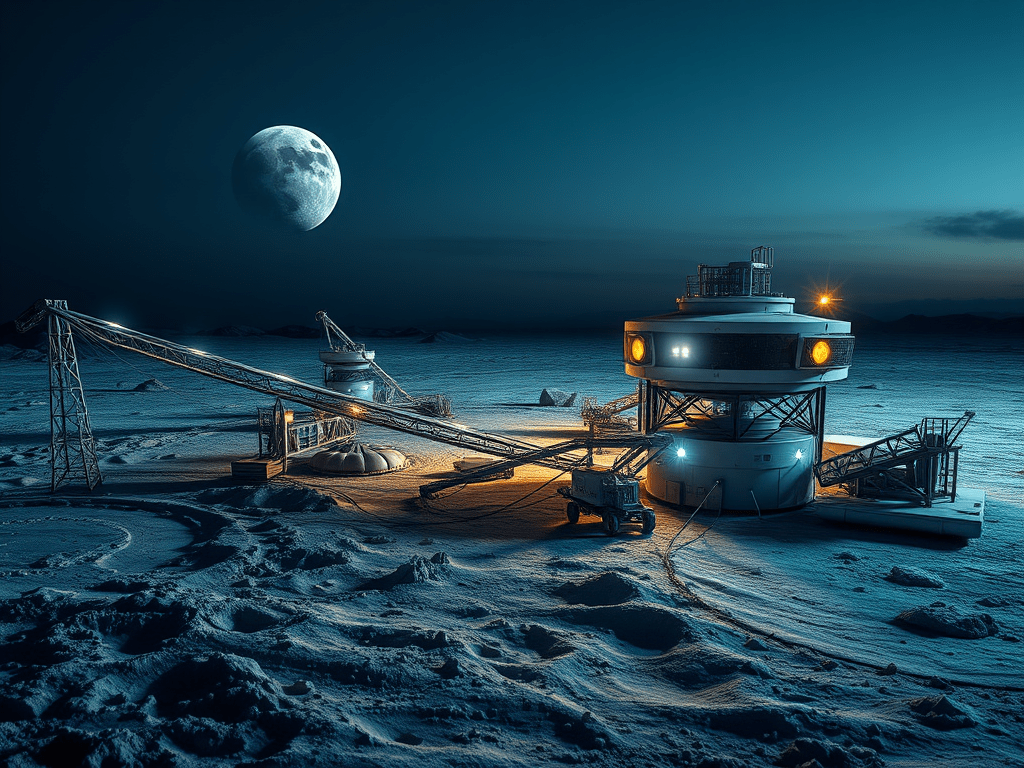
Modern society faces an escalating demand for energy, and traditional energy sources are increasingly fraught with environmental and economic challenges. Nuclear fusion, the process that powers stars, offers the potential for a safe, virtually boundless, and clean energy source by fusing light atomic nuclei into heavier ones. Among the candidate fuels, helium-3 stands out due to its ability to undergo reactions that produce minimal neutron radiation—thereby reducing the risks of radioactive waste and material degradation. In the context of recent lunar exploration milestones, such as the successful Chang’e-5 mission, the viability of helium-3 extraction and utilization has gained significant attention.
Helium-3 as a Fusion Fuel
Helium-3 offers several clear advantages as a fusion fuel:
- Aneutronic Reaction Pathways: One of the most compelling reactions is the deuterium–helium-3 (D–He³) fusion process, which yields helium-4 and a high-energy proton while minimizing neutron production. This characteristic reduces radiation hazards and could lead to simpler, more durable reactor designs.
- High Energy Density: The energy produced per unit mass of helium-3 is extraordinary. It is estimated that 1 kg of helium-3 can generate enough energy to sustain an 18.7595 MW power station for an entire year. This translates to an energy density that far exceeds that of conventional chemical fuels and even many nuclear fission processes.
- Environmental Benefits: Given its virtually aneutronic nature, helium-3 fusion holds the promise of being a cleaner alternative to both fossil fuel combustion and conventional fission reactors.
Lunar Helium-3 Resources and Chang’e-5 Mission Achievements
One of the most compelling aspects of helium-3 is its abundant presence on the Moon. Estimates indicate that the lunar surface could contain as much as 1.2 billion kg of helium-3, predominantly implanted by the solar wind over billions of years. This immense reservoir positions the Moon as a strategic asset in the quest for sustainable energy.
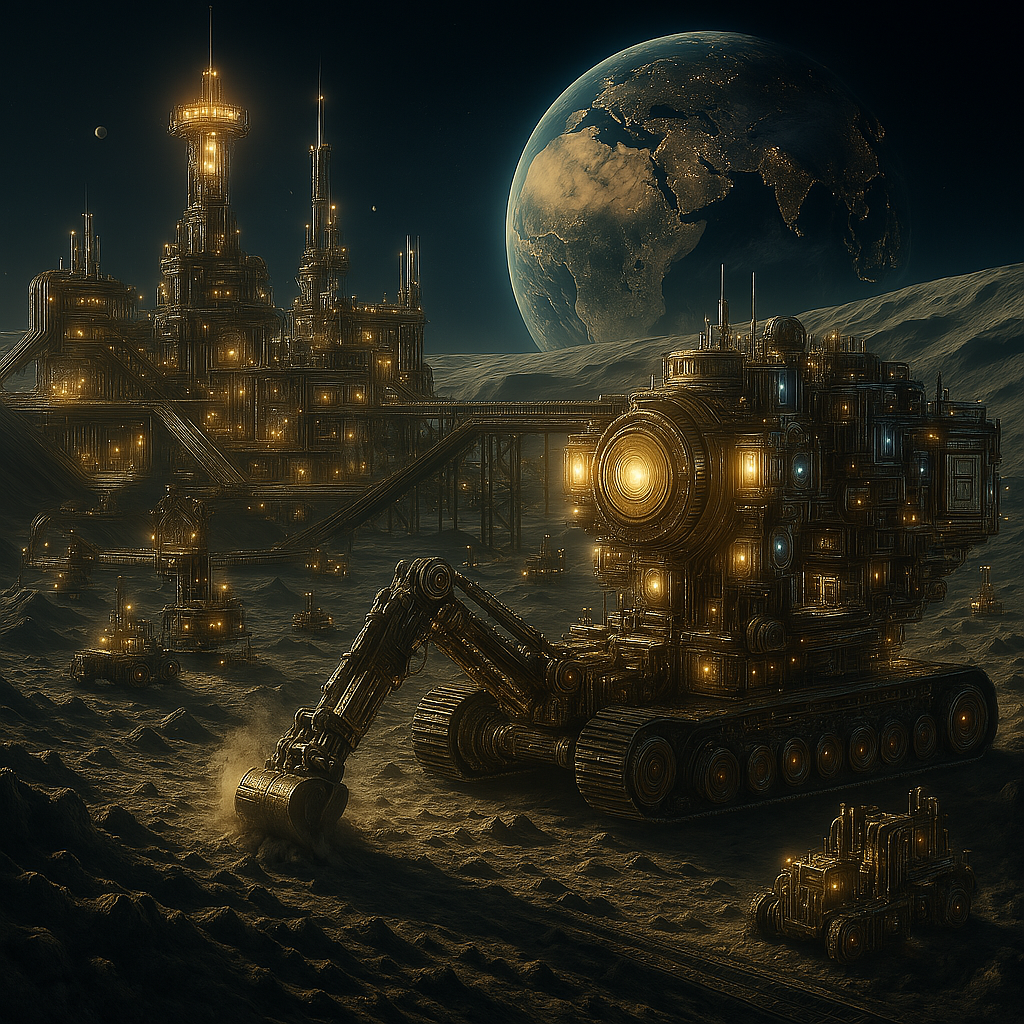
China’s Chang’e-5 mission, which successfully returned 2 kg of lunar rocks and regolith, symbolizes a pivotal leap in extraterrestrial resource exploration. Not only did the mission demonstrate the technical feasibility of lunar sample return, but it also would have provided direct insight into the distribution and concentration of helium-3 in the lunar regolith. These findings fuel discussions about the economic and technological viability of harvesting helium-3—a key stepping stone toward realizing helium-3 fusion reactors.
Energetic Analysis and Feasibility
Let us consider a simplified quantitative framework:
| Parameter | Value |
| Helium-3 consumption | 1 kg |
| Power station output | 18.7595 MW |
| Duration of continuous operation | 1 year |
| Estimated lunar helium-3 reserve | 1.2 billion kg |
| Chang’e-5 sample return mass | 2 kg |
The calculation supporting the claim that 1 kg of helium-3 can power an 18.7595 MW station for one year is derived from the expected energy yield of the D–He³ reaction. While laboratory fusion reactors have yet to achieve break-even conditions with any fusion fuel, the theoretical energy density offered by helium-3 suggests that, should practical reactors be developed, a minuscule mass of fuel could supply vast amounts of energy. However, the realization of such systems demands breakthroughs in plasma confinement, energy extraction, and efficient lunar resource processing.
Fusion: The Future of Energy?
The visionary promise of helium-3 fusion extends well beyond academic curiosity; it represents a potential paradigm shift in global energy production. Several key points bolster this optimism:
- Reduced Environmental Impact: The near-absence of high-energy neutrons minimizes radioactive waste and long-term environmental hazards—a stark contrast to current fission technology.
- Economical Long-Term Fuel Supply: The Moon’s extensive helium-3 deposits, if harnessed effectively, could provide humanity with a sustainable energy source that outstrips the life expectancy of terrestrial fossil fuels.
- Technological and Geopolitical Implications: The development of helium-3 fusion would not only mark a monumental technological achievement but also recalibrate geopolitical strategies surrounding energy independence and resource control.
Yet, fusion—especially using helium-3—is not without formidable challenges. Engineering a reactor that operates with the precision required for controlled fusion reactions, alongside establishing the infrastructure for lunar mining and material transport, remains a daunting prospect. International collaboration and sustained research investment will be essential to overcome these challenges.
Economic Viability of Lunar Helium-3 Mining
The scientific and technological promise of helium-3 fusion is undeniably compelling, yet the economic feasibility of lunar mining remains a formidable challenge. Extracting helium-3 from the Moon’s regolith requires advanced excavation, processing, and transportation infrastructure, all of which entail substantial costs and logistical hurdles. The viability of helium-3 mining as an energy solution ultimately depends on a cost-benefit analysis that weighs the expenses of lunar operations against the energy potential of helium-3 fusion.
Unlike conventional terrestrial mining, lunar helium-3 extraction involves low-concentration recovery, with helium-3 embedded in the lunar soil at only 20–30 parts per billion. Large-scale mining operations would need to process millions of metric tons of lunar regolith, presenting significant technological and financial obstacles that must be overcome.
Despite its extraordinary energy density, helium-3 fusion remains theoretical—no reactor has yet achieved commercial break-even using helium-3 as fuel. Establishing a viable helium-3 market would require a fully functional and economically competitive fusion industry, a milestone that is still decades away.
If helium-3 fusion were successfully developed, the energy potential of the Moon’s reserves could be valued at trillions of dollars, revolutionizing global energy markets and reshaping the future of space-based resource utilization.
Future Perspectives
Moving forward, interdisciplinary research must converge on several fronts:
- Advanced Fusion Reactor Designs: Continued innovation in magnetic and inertial confinement systems is imperative for achieving net-positive energy output.
- Lunar Mining and Extraction Technologies: Developing economically viable methods for harvesting helium-3 from the lunar regolith will be as critical as fusion reactor breakthroughs.
- Transportation to Earth: Delivering mined helium-3 to Earth involves intricate logistics and substantial costs associated with interplanetary cargo transport, challenges that must be addressed.
- International Collaboration: Energy challenges transcend national boundaries, and cooperative efforts among space agencies, research institutions, and industry stakeholders will accelerate progress toward helium-3 fusion.
These factors underscore the importance of a concerted global effort to harness a resource that could ultimately secure a future powered by clean, sustainable fusion energy.
Conclusion
The transformative potential of helium-3 fusion is both alluring and daunting. On paper, the energy yield—where 1 kg of helium-3 can power an 18.7595 MW station for an entire year—coupled with the Moon’s vast reserves of this rare isotope, paints a picture of an energy future that is clean, economical, and sustainable. However, realizing this vision hinges on overcoming significant technical and logistical hurdles in fusion reactor design and lunar resource extraction.
The Chang’e-5 mission has provided a tangible demonstration of our capability to access and analyze lunar materials, setting the stage for future endeavors in extraterrestrial resource utilization. In answering the question, “Is Fusion the Future?”—the evidence suggests that while the pathway to practical helium-3 fusion is steep and laden with challenges, its successful realization would indubitably revolutionize our energy paradigm. As research progresses, the integration of lunar helium-3 into our energy strategy could very well mark the dawn of a new age in clean energy innovation.
Also See
Mars vs. Moon: The Mars Colonization Myth Hiding the Reality of Orbital Control and Lunar Mining

 Adeerus Ghayan